Questions to Ask Before Joining a Dermatology Fellowship
Med Fellow Academy
Medical Education Experts
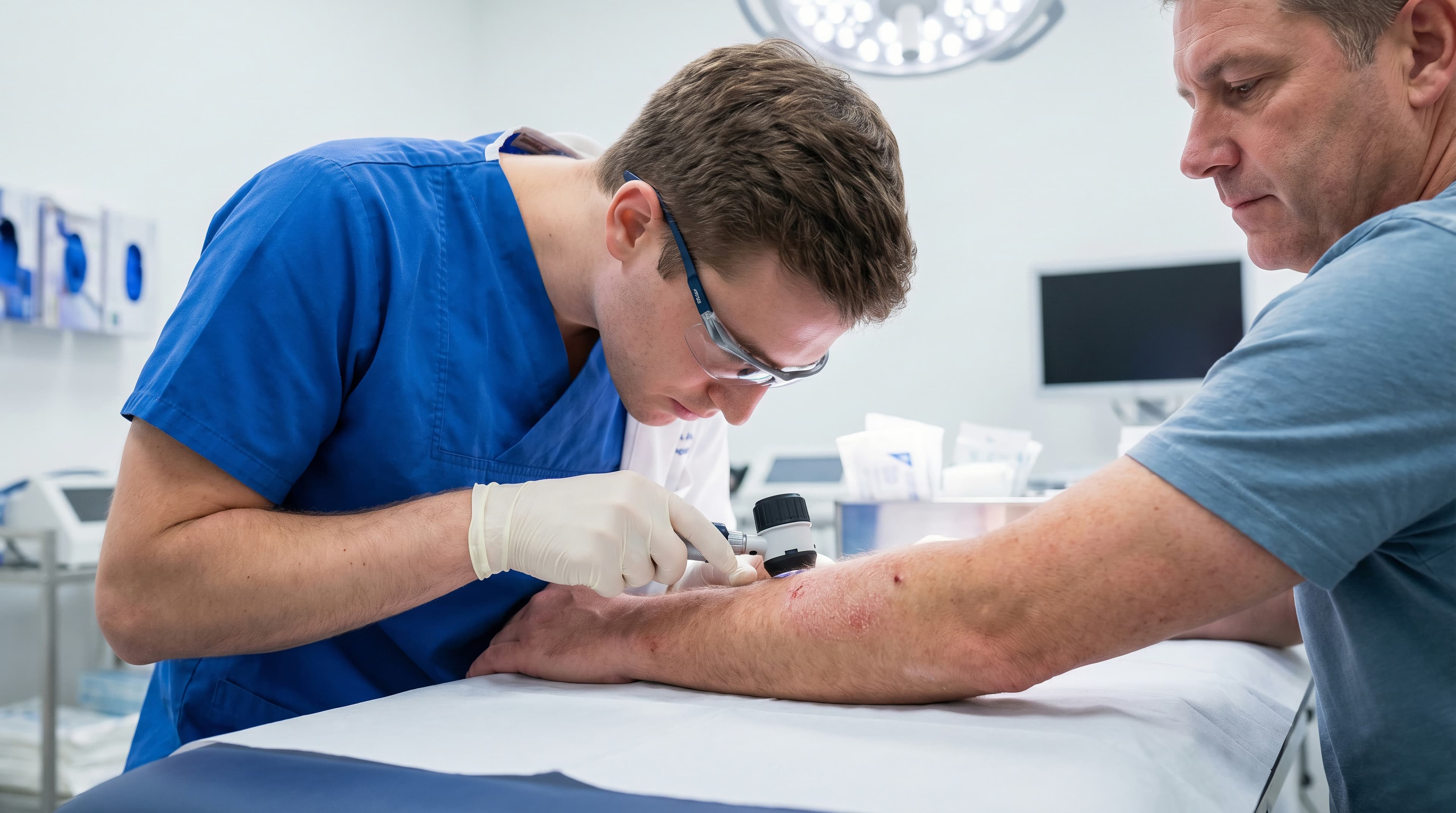
Before you pay the fee, there is one question that matters more than the course brochure: what exactly am I getting from this fellowship? Two programs can have almost identical names but offer very different learning experiences. Before joining a Dermatology Fellowship, understand the curriculum, eligibility, faculty, teaching method, clinical exposure, procedural learning, assessment, certification, schedule, total cost, and how the program fits your career plans.
What Do I Actually Want to Learn?
A doctor looking to improve diagnosis has different needs from someone interested in cosmetic dermatology, procedures, or further specialty training. If you want clinical dermatology knowledge, look closely at coverage of:
If you are interested in aesthetic dermatology, check whether cosmetic dermatology, skin rejuvenation, aesthetic procedures, and lasers are actually in the syllabus and whether they are taught academically, demonstrated, observed, or performed under supervision. If you need practical exposure, don't settle for the phrase "hands-on training" — ask what you will actually do. And knowing whether this is part of a larger career plan makes it easier to decide whether a particular course is worth your time and money.
Am I Eligible for the Dermatology Fellowship?
It is surprisingly easy to research a course only to discover you do not meet its admission requirements. Ask the provider:
- ✓Is MBBS sufficient?
- ✓Is a postgraduate qualification required?
- ✓Is dermatology experience preferred?
- ✓Are doctors from other specialties eligible?
- ✓Is professional registration required?
- ✓Is there an entrance test or interview?
Ask whether clinical experience is mandatory, preferred, or not required. If you practise outside your country of qualification, also ask about registration requirements, documentation, country-specific eligibility, employer requirements, and clinical training permissions.
What Does the Curriculum Really Cover?
A course called a "Dermatology Fellowship" should not be evaluated by its title alone. Ask for the complete module-wise curriculum, and check:
- ✓Does it cover clinical dermatology (common and complex skin conditions, diagnosis, treatment principles, follow-up)?
- ✓Does it include dermato-oncology (suspicious lesions, skin tumors, skin cancers, assessment, referral)?
- ✓Does it cover infectious dermatology (fungal, bacterial, viral, parasitic, tropical)?
- ✓Does it include inflammatory disorders (psoriasis, eczema, dermatitis, urticaria, autoimmune skin disease)?
- ✓Does it cover hair and nail disorders?
- ✓Is aesthetic dermatology included (cosmetic assessment, skin rejuvenation, lasers, procedural dermatology)?
- ✓Are special populations discussed (children, older adults, pregnant patients)?
Who Are the Faculty and Mentors?
Review the faculty's medical qualifications, specialty training, clinical experience, academic background, and areas of expertise — and check whether their specialties match your goals (a doctor interested in procedural dermatology may benefit from faculty with relevant procedural or aesthetic experience). Ask whether you will have access to live teaching sessions, case discussions, Q&A sessions, academic mentoring, project guidance, and feedback. A flexible course with no meaningful academic interaction may offer a very different learning experience.
What Clinical Exposure Will I Actually Get?
A course may advertise "clinical exposure," but ask the provider to distinguish between:
Clinical Observation
Watching consultations or procedures.
Demonstration
Faculty or clinicians demonstrating an examination or procedure.
Simulation
Practicing in a controlled educational environment.
Supervised Practical Training
Performing permitted activities under appropriate supervision.
If hospital attachment is included, ask:
- ✓Which hospital or clinical centre?
- ✓How long is the attachment?
- ✓Is it mandatory?
- ✓What activities are included?
- ✓Who provides supervision?
- ✓Are there additional costs?
Does clinical exposure mean I become independently competent? No. Exposure, supervised education, and independent procedural competency are different stages of professional development. A fellowship certificate should not automatically be interpreted as evidence of independent competency to perform dermatological procedures.
Is Online, Offline or Hybrid Better?
Online learning can be useful for doctors who want flexibility while continuing clinical work — theory, case discussions, lectures, assessments, academic projects, and literature review. In-person learning may be more useful when your main goal is clinical observation, demonstrations, simulation, practical exposure, or face-to-face mentoring. Hybrid learning combines online academic education with selected in-person clinical components. Ask about the schedule:
- ✓How many hours per week?
- ✓Are classes live?
- ✓Are recordings available?
- ✓Which sessions are mandatory?
- ✓Are clinical dates fixed?
- ✓Can I take leave or defer a session?
How Will I Be Assessed, and What Does the Certificate Represent?
Ask whether assessments are online, written, oral, case-based, or practical; whether case discussions and assignments or projects are part of the program; and how completion is determined (minimum sessions, assignments, examinations, project, clinical requirements). For the certificate, ask for the exact legal or institutional name of the issuer, what the credential is called (fellowship certificate, certificate of completion, academic credential, clinical training certificate), whether it is a formal specialist qualification (it is usually not equivalent to an MD, recognized postgraduate specialty qualification, or specialist registration), and whether it can be used for licensing or registration — check that with the relevant regulator in the country where you intend to practise.
What Will the Fellowship Really Cost Me?
The advertised tuition fee may not be the final amount. Ask about application fees, registration, examinations, certification, clinical placement, learning resources, travel, and accommodation. Ask what changes between different course options (online-only vs a clinical component). If installments are available, ask how many, whether interest is charged, whether there are processing fees, and what happens if you miss an installment. And understand the rules around cancellation, deferral, withdrawal, course transfer, and refunds before making payment.
Will This Fellowship Actually Help My Career?
A fellowship should have a purpose beyond adding another certificate to your CV. Look at whether the curriculum addresses the kinds of patients and conditions you want to manage; if cosmetic dermatology is your target, confirm the course actually covers relevant aesthetic and procedural topics; and remember that training should be used within the scope permitted by your qualifications, registration, employer, and local regulations. A fellowship may complement professional development, but it should not be assumed to replace formal specialty or superspecialty training requirements.
The 15 Questions You Should Ask
What Should Make You Think Twice?
Vague Course Content
If there is no detailed curriculum, it is difficult to judge the educational value.
Unclear Practical Training
“Hands-on experience” without details should lead to more questions.
Guaranteed Career Claims
Be cautious about guarantees involving jobs, promotions, specialist status, or licensing.
Unclear Certification
You should never have to guess who issues your qualification.
Hidden Fees
Ask for the complete financial commitment before enrolling.
No Clear Assessment
A program with no clear method of assessing learning may provide a very different academic experience.
Know What You Are Joining
Before enrolling, review the MedFellow Academy course structure, eligibility, training format, and available clinical pathway.
About Med Fellow Academy
MedFellow Academy provides structured, flexible fellowship courses for practicing doctors — combining evidence-based curriculum, expert faculty mentorship, and hands-on clinical training across 60+ specialties.