How to Choose a Dermatology Fellowship Course
Med Fellow Academy
Medical Education Experts
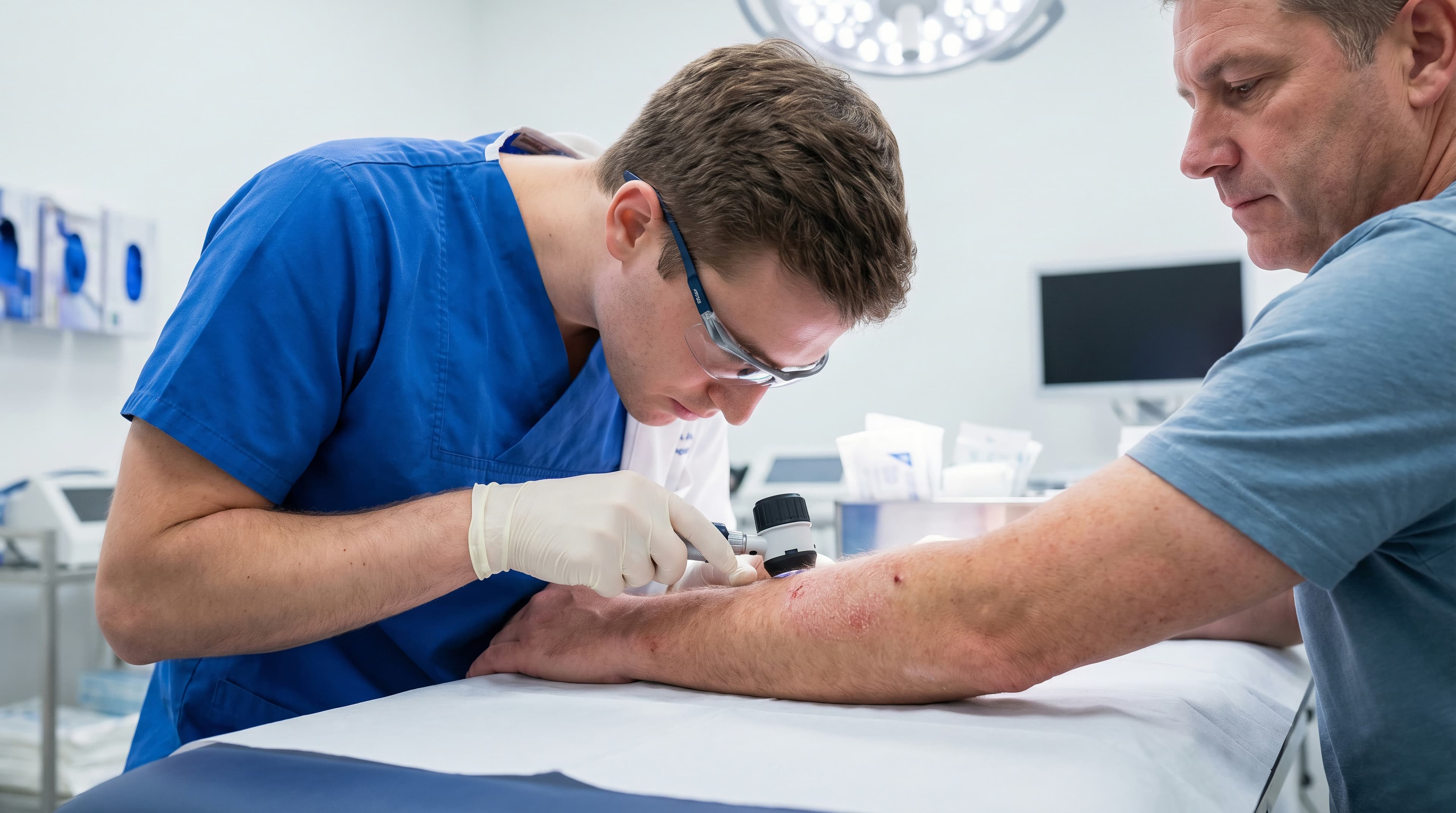
Two courses can have almost the same name and still offer very different learning experiences. One may focus mainly on online theory. Another may include case discussions and clinical observation. A third may be heavily focused on procedures or aesthetic dermatology. Choosing the right fellowship is not simply about the number of modules or the lowest fee — you need to understand what you will learn, how you will learn it, who will teach you, what clinical exposure is included, how you will be assessed, and what the certificate actually represents.
What Do You Want From Dermatology Training?
Before comparing providers, start with your own objective. If you want stronger clinical knowledge, look for a curriculum with strong foundations in clinical dermatology, diagnosis, disease management, and patient evaluation. If you are interested in cosmetic dermatology, check whether aesthetic dermatology, cosmetic procedures, and laser therapy are actually part of the curriculum. If you want procedural exposure, ask whether the program offers theoretical learning, demonstrations, observation, simulation, supervised clinical exposure, or hands-on training — these are very different learning experiences. If you are studying while working, a flexible online or hybrid format may be more practical. And if you are planning further training, make sure you understand how the fellowship fits into that pathway, since a fellowship certificate should not automatically be assumed to replace a formally recognized postgraduate or specialist qualification.
How to Evaluate a Dermatology Fellowship Curriculum
Start by asking for the complete syllabus and learning outcomes. A well-rounded course should cover core clinical concepts before moving into advanced or aesthetic areas:
Check whether the course introduces relevant diagnostic methods and clinical reasoning — dermoscopy, skin investigations, biopsy-related concepts, and interpretation of relevant findings. If skin lesions and tumors are important to you, check whether the curriculum covers suspicious lesions, skin cancers, and principles of evaluation. Depending on your objectives, you may also want exposure to:
Do not stop at the list of topics — ask how deeply each topic is taught, and look for evidence-based teaching, updated clinical concepts, newer technologies, and current treatment approaches.
Who Is Teaching the Fellowship?
A curriculum is only as useful as the way it is taught. Review the faculty's:
Do not choose a course based only on the number of faculty members — look at whether the faculty's expertise matches what you want to learn, and find out whether you can interact with instructors through live sessions, case discussions, Q&A sessions, mentorship, project guidance, and feedback. A recorded course and an interactive fellowship can feel completely different from a learner's perspective.
What Clinical Exposure Will You Actually Get?
The phrase "clinical exposure" can mean different things:
Observation
Watching dermatology consultations or procedures and learning how they are performed — valuable, but observational learning.
Case-Based Learning
Working through patient cases, discussing diagnoses, comparing treatment options, and reviewing outcomes — this develops clinical reasoning.
Simulation
Demonstrations or simulation-based learning to introduce procedural concepts.
Supervised Practical Training
Participating in procedures under appropriate supervision and within the permitted scope of the training environment — different from observation.
Hands-On
Do not assume this means independent procedural practice. Ask exactly which procedures are included, how many training days, who supervises, what fellows are permitted to perform, and whether competency is formally assessed.
Online, Offline or Hybrid: Which Is Better?
There is no universally best format. Choose online when flexibility is your top priority (it supports lectures, recorded sessions, case discussions, assignments, academic learning, assessments, and literature review). Choose offline when intensive face-to-face clinical exposure is your main objective (face-to-face teaching, clinical observation, hospital exposure, procedure demonstrations, simulation, direct faculty interaction). Choose hybrid when you want academic flexibility plus an in-person clinical component — MedFellow currently lists both a fully online pathway and an 11 online + 1 clinical month option with hospital attachment. The important thing is to match the format to the learning outcome.
Check Eligibility, Certification & Fees
Verify eligibility before spending time comparing courses — some providers require prior postgraduate dermatology training, while others accept doctors with a broader medical qualification (MedFellow's current course page lists MBBS). Ask whether previous dermatology experience is mandatory, preferred, or not required, and whether professional registration is needed for any clinical training. Understand what the certificate represents: ask for the exact name of the issuing organization, whether it documents completion of an educational or professional-development fellowship, and separately check the rules that apply to your intended professional use. When comparing fees, ask what you are receiving for the fee — curriculum depth, faculty access, clinical exposure — and check additional costs (registration, exams, certification, clinical attachment, learning resources, travel, accommodation) plus the refund policy. MedFellow's current page lists ₹1,40,000 (fully online) and ₹1,75,000 (11 online + 1 clinical month), with EMI options; fees can change, so confirm current pricing directly before enrollment.
10 Questions to Ask Before Joining
- ✓Who is eligible for this fellowship?
- ✓Can I see the complete curriculum and learning outcomes?
- ✓Who teaches the program, and what is their relevant experience?
- ✓How much clinical exposure is included? (Ask for specifics.)
- ✓Is practical training hands-on or observational?
- ✓How is my learning assessed?
- ✓What does the certificate represent, and who issues it?
- ✓What is the total cost, including all mandatory and additional expenses?
- ✓Can I complete the course while working?
- ✓Does this fellowship fit my career plan?
Red Flags Before You Enroll
A Very Broad Course With No Detail
If a course claims to teach everything but gives no meaningful syllabus, investigate further.
Unclear Practical Training
“Hands-on exposure” should always be explained in detail.
Guaranteed Career Claims
Be cautious about guaranteed jobs, promotions, specialist recognition, or guaranteed income.
Unclear Certificate Details
You should know exactly who issues the credential and what it represents.
No Assessment
A program with little or no meaningful assessment may provide a very different learning experience from a structured fellowship.
Pressure to Enroll Quickly
A good educational decision should give you enough time to review the curriculum, fees, eligibility, and terms.
Final Checklist Before You Enroll
Compare Your Options
Review the MedFellow Academy Dermatology Fellowship and compare the available training pathways — curriculum, eligibility, learning format, fees, and clinical training options — before making your decision.
About Med Fellow Academy
MedFellow Academy provides structured, flexible fellowship courses for practicing doctors — combining evidence-based curriculum, expert faculty mentorship, and hands-on clinical training across 60+ specialties.