Is a Dermatology Fellowship Worth It?
Med Fellow Academy
Medical Education Experts
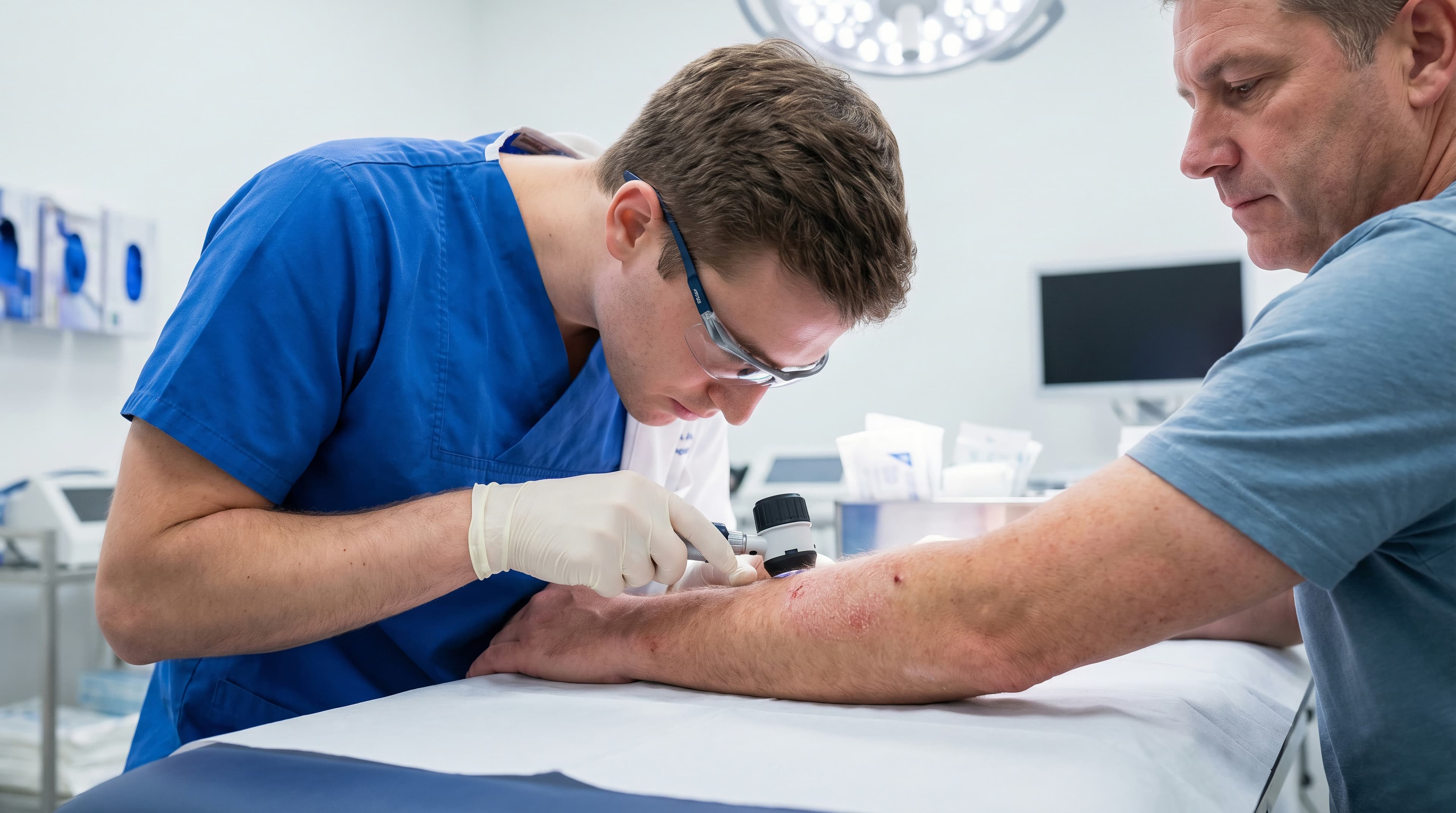
Is a Dermatology Fellowship really worth the time, effort, and money? For many doctors, the answer depends on what they expect from the fellowship. A well-designed program can provide structured learning in clinical dermatology, skin disorders, dermatological diagnosis, cosmetic dermatology, laser therapy, skin surgery, and related procedures — but a fellowship is not automatically valuable simply because it carries the word "fellowship." The real question is: what will you gain from it that you do not already have?
When Is a Dermatology Fellowship Worth It?
A fellowship is most valuable when it solves a specific professional need:
You Want Structured Dermatology Knowledge
A structured fellowship can organize learning around skin examination, diagnosis, common and complex skin conditions, inflammatory disorders, infections, lesions, and treatment principles — a defined learning pathway rather than knowledge picked up randomly from short courses and day-to-day experience.
You Want to Expand Into Procedural Dermatology
Interest in dermatological procedures, skin surgery, cosmetic procedures, laser therapy, aesthetic dermatology, scar management, pigmentary concerns, and hair and nail disorders. Current fellowship programs commonly combine clinical dermatology, dermatosurgery, lasers, cosmetic procedures, and aesthetic medicine.
You Want Flexible Professional Development
A working doctor may not be able to take a long career break. An online or hybrid fellowship can allow the academic component to be completed alongside existing responsibilities — MedFellow's current program is a 12-month fellowship with a fully online pathway and an option combining 11 months of online learning with a clinical month.
You Want to Explore a New Area of Practice
A fellowship can help doctors evaluate whether dermatology, cosmetic dermatology, or procedural dermatology is an area they want to pursue more deeply. The important point is to choose a program that matches that specific objective.
What Do You Actually Gain From the Training?
The value should be measured by learning outcomes, not by the certificate alone. A structured curriculum can help doctors build deeper clinical knowledge (clinical dermatology, inflammatory disorders, infectious and tropical dermatology, skin lesions, dermato-oncology, regional dermatology, special populations); better diagnostic thinking (describing lesions, assessing morphology and distribution, constructing a differential diagnosis, deciding when further investigation is needed); broader procedural understanding (skin procedures, cosmetic procedures, laser therapy, dermatological surgery, aesthetic treatment planning — with the exact level of practical training varying by fellowship); and better patient communication (discussing diagnosis, realistic outcomes, treatment options, risks, and follow-up). MedFellow's current six-module curriculum covers Foundations of Clinical Dermatology, Skin Lesions and Dermato-Oncology, Regional Dermatology, Inflammatory Skin Disorders, Infectious and Tropical Dermatology, and Special Populations and Aesthetic Basics.
Is Procedural Exposure Worth the Investment?
For doctors interested in aesthetic or procedural dermatology, practical exposure can be one of the biggest reasons to pursue a fellowship. A comprehensive program may introduce concepts related to patient selection, contraindications, treatment planning, device selection, procedure preparation, post-procedure care, and complication recognition, plus laser-based treatment, skin surgery, and cosmetic procedures. But do not confuse exposure with competency — watching or discussing a procedure is different from performing it under supervision. A fellowship should clearly state whether its practical component includes observation, demonstration, simulation, supervised hands-on training, or independent practice. A fellowship certificate by itself should not be treated as proof of independent procedural competency.
Is the Investment Worth the Cost?
A fellowship should be evaluated as an educational investment, not simply as a course fee. Compare what you receive (curriculum depth, faculty expertise, clinical exposure, practical training, learning resources, assessments, mentorship, duration, certification, career support); consider the opportunity cost (reduced clinical hours, travel, leave, weekend study — the value may be higher when a flexible course lets you continue working while learning); and compare the total cost (course fees, examination charges, clinical placement, travel, accommodation, learning materials). A ₹1 lakh course is not necessarily better than a ₹2 lakh course, and a more expensive course is not automatically better. For reference, MedFellow's current Dermatology page lists ₹1,40,000 for its fully online option and ₹1,75,000 for its 11-month online plus 1 clinical month option.
When Should You Skip a Dermatology Fellowship?
You Only Want One Specific Procedure
A focused workshop or targeted course may be more appropriate than a 12-month fellowship.
The Curriculum Does Not Match Your Goal
A fellowship may sound impressive but provide limited value if it focuses on areas you do not intend to study.
Practical Exposure Is Unclear
If you are specifically looking for hands-on training and the provider cannot clearly explain what practical exposure includes, investigate further.
You Expect Automatic Specialist Recognition
A fellowship should not be chosen on the assumption that the certificate grants specialist registration, consultant status, or independent procedural privileges.
You Cannot Commit to the Course
A program is unlikely to provide value if you cannot consistently attend, study, complete assessments, or participate in the required clinical components.
Dermatology Fellowship: Pros and Cons
| Potential Benefits | Possible Limitations |
|---|---|
| Structured dermatology education | Requires time and commitment |
| Broader clinical knowledge | Quality varies between providers |
| Case-based learning | Online learning has practical limitations |
| Exposure to cosmetic dermatology | Hands-on exposure may vary |
| Knowledge of laser and procedures | Procedures require appropriate supervision |
| Flexible study options in some programs | Certificate does not automatically equal specialist qualification |
| Academic and professional development | Additional costs may apply for clinical components |
| Foundation for continued learning | Career value depends on individual goals |
A fellowship can be highly valuable for one doctor and unnecessary for another.
How to Decide if It Is Worth It for You
Step 1: Identify Your Gap
Clinical knowledge? Procedural exposure? Confidence with diagnosis? Academic structure?
Step 2: Identify Your Goal
Improve current practice? Develop a cosmetic dermatology interest? Gain structured specialty knowledge? Prepare for further training?
Step 3: Match the Program
Compare your goal with the actual curriculum and training model.
Step 4: Check the Practical Component
If practical training matters to you, verify exactly what is included.
Step 5: Calculate the Total Investment
Consider time, money, travel, study requirements, and opportunity cost.
Step 6: Verify the Credential
Understand what the fellowship certificate does and does not represent.
Step 7: Decide Based on Your Career
A fellowship should support your professional plan, not replace one.
10 Questions That Reveal Fellowship Value
- ✓What will I actually learn? (Request the complete curriculum.)
- ✓Who teaches the program?
- ✓Is the training clinical, academic or both?
- ✓What does clinical exposure include? (Ask for specific activities and duration.)
- ✓Is there supervised practical training, and exactly what can fellows participate in?
- ✓How is learning assessed?
- ✓What does the certificate represent?
- ✓What is the total cost, including all additional charges?
- ✓Can I complete it while working?
- ✓What does this add to my career?
Final Verdict: Is It Worth It?
It can be, especially when the program addresses a genuine learning gap and gives you skills or knowledge relevant to your professional goals — particularly for doctors who want structured dermatology education, broader clinical knowledge, exposure to cosmetic and procedural dermatology, flexible professional development, or preparation for further learning. But not every fellowship offers the same value. The strongest programs should be evaluated based on curriculum quality, faculty expertise, clinical exposure, practical training, learning format, assessment, certification, total cost, and career relevance. The biggest mistake is choosing a fellowship simply because it sounds impressive. When the answers to "what will I learn, how will I learn it, how much practical exposure will I receive, what will the certificate represent, and what will this add to my career" align with your goals, a dermatology fellowship can become a meaningful professional investment rather than simply another credential.
Explore the Training Before You Decide
Review the MedFellow Academy Fellowship in Dermatology, including its curriculum, learning options, and clinical pathway.
About Med Fellow Academy
MedFellow Academy provides structured, flexible fellowship courses for practicing doctors — combining evidence-based curriculum, expert faculty mentorship, and hands-on clinical training across 60+ specialties.