Online vs Offline Dermatology Fellowship
Med Fellow Academy
Medical Education Experts
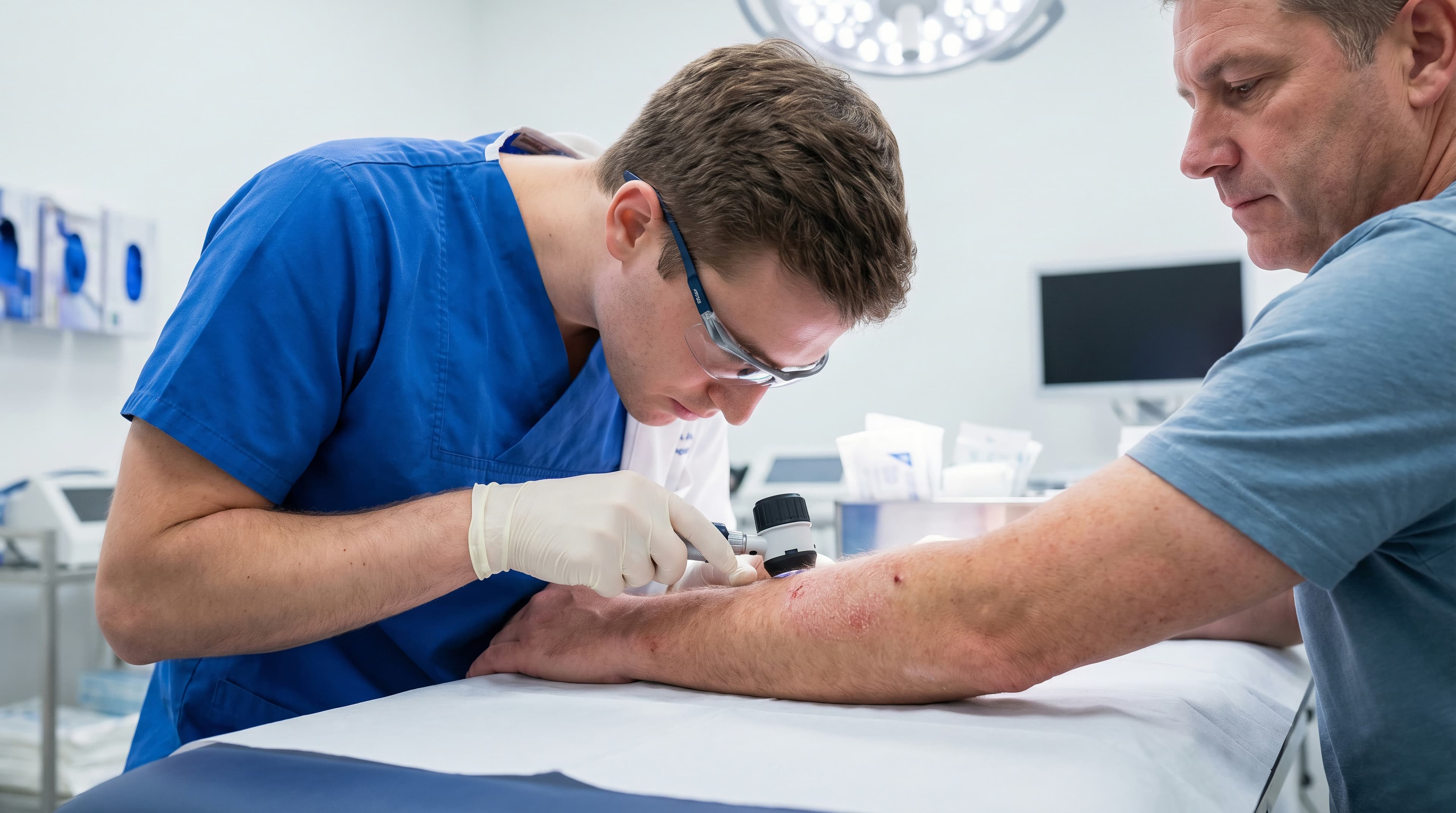
One doctor has a busy clinic and cannot relocate for a full-time program. Another wants to spend as much time as possible inside a hospital, observe procedures, and learn in a clinical environment. Both may want the same thing — better dermatology knowledge and stronger clinical skills. But should they choose an online, offline, or hybrid dermatology fellowship? There is no universal winner. The better option depends on what you want from the fellowship, how much time you can commit, what kind of clinical exposure you need, and whether you are already working as a doctor. The key is to compare how you learn, not just where you learn.
Online vs Offline: What Really Matters?
A more useful question than "which one is better?" is "which one is better for my learning goals?" If flexibility is your priority, online learning has a clear advantage — you can study without necessarily relocating, and recorded sessions can make revision easier around clinical responsibilities. If clinical immersion is your priority, offline learning can provide a stronger connection to the hospital environment, with opportunities to observe patient care, attend clinical rounds, and interact directly with faculty. If you want both, a hybrid model lets you complete academic learning online while using an in-person clinical component for exposure and practical learning.
What Is an Online Dermatology Fellowship?
An online fellowship delivers some or most of the academic component remotely — but that does not mean the experience is limited to watching videos. A well-structured online program may include:
The biggest advantage is flexibility — a doctor can potentially continue clinical work while completing the fellowship instead of taking an extended career break. Case-based learning still works online: discussions can be conducted virtually by presenting patient history, clinical photographs or findings, differential diagnosis, investigation, treatment options, and follow-up. The quality depends heavily on the faculty, case selection, interaction, and teaching method.
The biggest limitation is physical clinical exposure. You cannot fully reproduce an operating room, dermatology procedure room, patient examination, or supervised procedure through a laptop. That matters particularly if your objective is to develop practical procedural skills.
What Is an Offline Dermatology Fellowship?
An offline fellowship requires physical attendance at the training location. The major advantage is immersion — the learner is present in the clinical environment, making spontaneous interaction easier and providing exposure to:
Dermatology is highly visual — seeing different skin conditions in real patients can add context that photographs alone cannot always provide, and offline exposure helps learners understand how dermatology services actually function. The biggest challenge is time: an offline fellowship can require fixed attendance, travel, relocation, accommodation, time away from practice, and greater scheduling commitment.
What Is a Hybrid Dermatology Fellowship?
A hybrid fellowship combines online academic learning with selected offline clinical or practical training — learn the theory remotely, apply and observe in person. The online portion may include live classes, recorded lectures, case discussions, assignments, assessments, and faculty interaction; the in-person component may include hospital attachment, patient observation, case discussions, demonstrations, clinical workflow exposure, and supervised practical learning. MedFellow Academy currently offers its Dermatology fellowship in both a fully online format and an 11-month online + 1 clinical month option with hospital attachment.
Online vs Offline vs Hybrid: The Comparison
| Factor | Online | Offline | Hybrid |
|---|---|---|---|
| Flexibility | Excellent | Limited | Very good |
| Travel required | Usually no | Yes | Limited |
| Recorded learning | Usually available | Less common | Usually available |
| Live faculty interaction | Possible | Strong | Strong |
| Case-based learning | Yes | Yes | Yes |
| Hospital exposure | Limited | Usually stronger | Included depending on program |
| Patient observation | Limited | Stronger | Possible |
| Hands-on exposure | Limited | Potentially stronger | Depends on clinical component |
| Supervision | Virtual or academic | In-person | Both |
| Suitable for working doctors | Excellent | More difficult | Excellent |
| Clinical immersion | Lower | High | Moderate to high |
Each format solves a different problem. There is no universal winner.
What About Case-Based Dermatology Learning?
Dermatology is naturally visual and pattern-oriented, making clinical cases particularly useful. A weak online course can simply provide recorded lectures; a strong online fellowship can use cases to make learning interactive. Before choosing a fellowship, find out:
- ✓Are real clinical cases discussed?
- ✓Are images used?
- ✓Can learners ask questions?
- ✓Do faculty explain differential diagnoses?
- ✓Are investigations discussed?
- ✓Are treatment decisions explained?
- ✓Are follow-up cases included?
A good faculty member can turn a clinical case into a teaching opportunity regardless of the format. The quality of case discussion may matter more than whether the discussion happens in a classroom or online.
Which Format Is Better for Hands-On Procedures?
Online learning is stronger for knowledge — indications, contraindications, patient selection, treatment principles, procedure steps, complication recognition, and post-procedure care. In-person training adds physical experience: patient positioning, equipment handling, sterile technique, clinical workflow, instrument familiarity, and supervised practice. But not every offline fellowship is truly hands-on — a program may be offline but primarily classroom-based, so do not assume offline equals hands-on. For any procedure-oriented course, ask:
- ✓Who supervises the training?
- ✓What can fellows actually perform?
- ✓Is the learning observational or hands-on?
- ✓How is competency assessed?
- ✓How many clinical sessions are included?
Which Format Is Right for You?
Choose online if you value maximum flexibility, continuing full-time work, learning from your current location, recorded content, academic and case-based learning, and minimal travel.
Choose offline if you value physical clinical immersion, face-to-face interaction, hospital exposure, patient observation, and direct access to the clinical environment.
Choose hybrid if you want flexible academic learning, continued professional practice, some in-person exposure, and a balance between convenience and clinical experience.
One factor matters across all three formats: the quality of the fellowship itself. Curriculum, faculty, case-based teaching, practical exposure, supervision, assessments, and career relevance should be evaluated before the delivery format. A great online fellowship can be more valuable than a poorly structured offline course. Also compare the total cost — online usually reduces indirect costs (travel, relocation, accommodation, time away from work), while offline can cost more than tuition. MedFellow's current page lists ₹1,40,000 (fully online) and ₹1,75,000 (online plus clinical month); verify current fees directly before enrollment.
Find Your Best Training Format
Explore the MedFellow Academy Fellowship in Dermatology and compare its online and clinical training options before enrolling.
About Med Fellow Academy
MedFellow Academy provides structured, flexible fellowship courses for practicing doctors — combining evidence-based curriculum, expert faculty mentorship, and hands-on clinical training across 60+ specialties.